

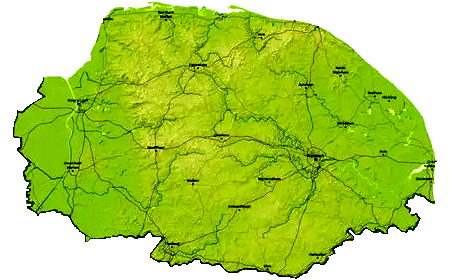

Why this 'tribute' to the spectacular county of Norfolk?
Simply because the county, or rather, the people living and working in Norfolk made such a huge impact, mostly good, a couple attrocious, upon the creation of what is four decades later, undeniably the world's leading RAC Expert System Application Engineering software.
Sadly the founding members of Mistral were forced to shut down operations in Norfolk and relocate to France in 2000. Forced out by a prejudiced, corrupt local Tax officer contriving egregious huge tax penalties. A situation subsequently and astonishingly voluntarily reversed some years later, directly by HMRC Headquarters. Along with sanctimonious apologies, full compensation and a begging letter asking if Mistral would be prepared to return to the UK. Mistral banked the substantial cheque but declined to reply, let alone condascend to offering any thanks. Apart from missing family and old friends we never regretted the move.
A collection of some little known facts about the beautiful county of Norfolk, along with a few related humerous anecdotes.
Norfolk is flat
Most people will tell you that. Especially those having never visited the unspoiled and picturesque county of rolling hills!
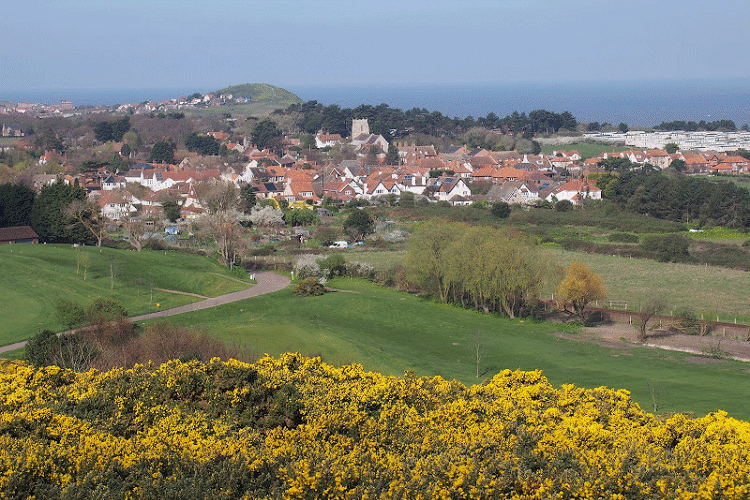
Beeston, Norfolk Highest point 338 feet above Sea Level.
Certainly there are flat parts. A few. Just as there are in neighbouring Cambridgeshire, Isle of Ely, Lincolnshire and Suffolk. Especially Lincolnshire. But 'flat' Norfolk isn't. The facts are Norfolk is a peninsula, albeit a blunt one, but one cannot travel through Norfolk to go north and beyond, other than by boat. Secondly, for the most part one has to travel across vast tracts of flat land, much of it below sea level, in order to reach Norfolk. However those areas are in the adjacent counties of Isle of Ely, Cambridgeshire and Lincolnshire.
Most people referring to Norfolk as 'flat' do so from their vantage point of ignorance. Having actually never visited the county and assume the flatter parts of bordering eastern Lincolnshire and northern Cambridgeshire continue all the way up through Norfolk to the North Sea. This is not the case. Beacon Hill at Beeston right on the north Norfolk coast for example is actually 338 feet in altitude. The village of Docking, on the other side of the county also approaches 300 feet in altitude. I know, I lived there for many years! Not exactly necessary to take Sherpas above the foothills when negotiating Norfolk, but 'flat' Norfolk certainly isn't.
Why is this important to mention? Simply to demonstrate the effect of 'High Norfolk', its topography and geographical location exposing it uniquely to sometimes fearsome winter north and north easterly winds. High winds bringing copious amounts of snow. There is nothing except ocean and ice between the North Norfolk coast and the North Pole!
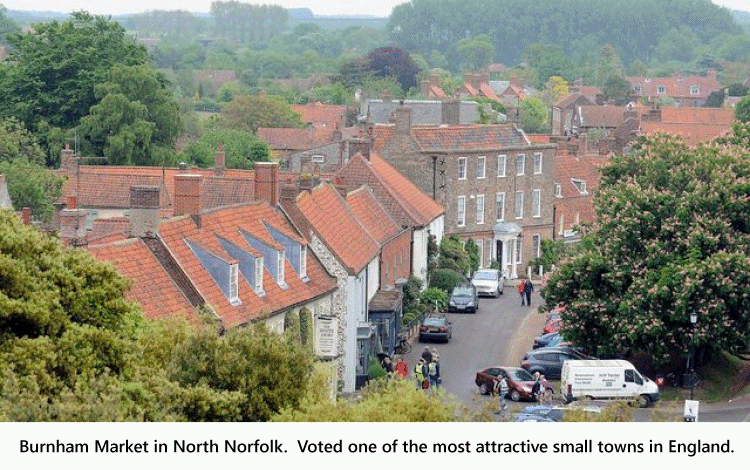
Norfolk, apart from not being flat, is also a relatively dry county. When compared with the rest of the British Isles Norfolk has the lowest annual rainfall. This dryness does not extend to winter snow though and many years see large areas, particularly in the rolling hills of 'High Norfolk', covered in and isolated for days on end by high snow drifts blocking roads. And, before Dr Richard Beeching's criminally insane act of destroying the county's rail network, its essential rail connections too.
Transport connections severed completely for a community are not just economically damaging but also dangerous of course. Emergency fire, ambulance and Police vehicles cannot get through. If the adverse conditions persist then food and medical supplies can become critical too. Hence planners launch their emergency contingency plans for snow clearance. Machinery for achieving this is far too expensive for Councils to have sitting around for the far greater majority of the time doing nothing. Road gritter trucks used for spreading roadside stocks of sand and salt are kept in reserve but excavators and snow ploughs are generally not kept on standby for the purpose. That provision falls upon local construction and groundworks machinery contractors to provide, under a system of emergency snow clearance duty. Effectively a system of requisitioning. All contractors are though of course fairly paid and at the standard hire rates.
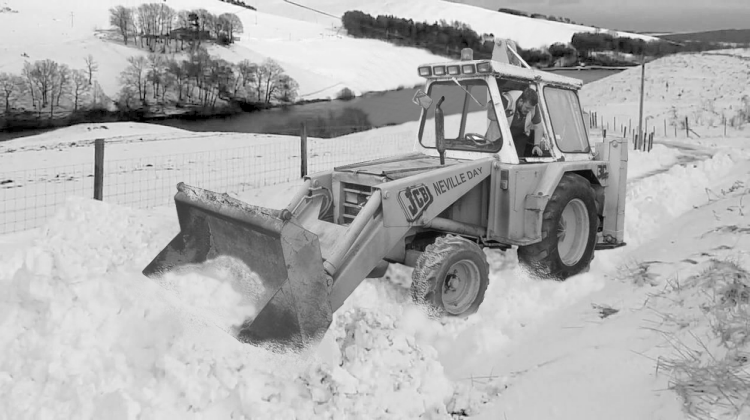
One such winter in the sixties saw all roads in West Norfolk cut off by deep drifts of two metres and always more in valleys and gullies. Neville Day Plant Hire Ltd was ordered to provide diggers and excavators to clear many key routes up from coast roads to villages such as Docking at three hundred feet above sea level.
There were no mobile phones in those days and when a digger driver set off he could be away from his depot for tens of hours in freezing conditions and sometimes white out, that is near total loss of visibility conditions. Snow clearance also required almost military like planning and management. Something the general public would be blissfully unaware of. Diesel and even food had to be brought out to drivers who can not simply turn around and go home for lunch!
One night Neville was concerned that one of his drivers had failed to reach a pre-arranged and anticipated telephone link to report back in. The road in question being known as the Red Barn crossing, through Fring to Docking. Our driver affectionately and appropriately known as 'Digger'. One of our best. In Dad's eye though, and quite correctly, all were best!
Digger had set off from Snettisham depot in his JCB 3C soon after dawn on the night before mainly cleared route to Red Barn road. By midday he had reached the telephone kiosk at the crossroads and reported back. Subsequently starting on the dip into Fring then the three mile rising and virtually uninhabited, save for one small group of cottages, stretch up to Docking. At three hundred feet altitude and thus much colder through exposure to the fearsome, sub zero, northerly gales.


It was tough going. Still snowing hard and snow drifts already beginning to form, dagger like, across and concealing Digger's wheel tracks. It got worse. The steep drop into Fring hamlet saw us slide off the road at the drift blocked Heacham to Great Bircham cross roads. Fortunately almost at the front door of one of the hamlet's few properties and the owners were at home (where else would they be?). With their help we managed to get the heavy old Austin back on to the road and pressed on in the failing light. A further mile up the hill toward Docking we finally came to an impassable 4 metre (12') high drift. But where was Digger, and his digger? No sign of either. Only the machine's tyre tracks disappearing under the drift ahead of us.
Digger's JCB was equipped with a row of powerful halogen spot lamps across the top of its cab. Dad reckoned they could shine a light on the Moon. Yet no sign of light ahead and so now Dad was getting really worried. Frightened actually. It wasn't unknown for a machine even as large and lumbering as a JCB for its driver to become disorientated in such white outs and slide off the road and roll into a gulley. Temperature was about ten below freezing. Not good to be out for hours with a stalled or out of fuel engine and so inoperative heater. Diesel also starts to freeze and 'gel' at around -10°C. Unless additives have been added to the diesel tank to prevent this from happening. Gelling of the diesel fuel lines blocks them and will mean of course the engine can no longer run. Much colder and the diesel lines can actually crack.
Dad, with torch in hand struggled up the frozen bank to try and gain a better view ahead. The blizzard simply reflecting torchlight back into his face. So he could see nothing. He turned his torch off at exactly the moment I saw his flat cap fluttering, ownerless, back down the bank into the glare of the Austin's headlamps. Dad was there no more. The frozen bank he had climbed atop wasn't a bank at all but a snow blocked and frozen six foot hawthorn hedge. Walking forward he had simply stepped into a farm gateway and into six feet depth of snow. Dad is 5' 8". Including his normally inseparable cap!
Five minutes of furious digging with one of the shovels we had sensibly brought and I had him out.
"Tha's a rummun!" Exclaimed Dad "Where's Digger?"
"Probably in the digger behind us Dad." I replied.
Turned out Digger had reached the point where we both now were and decided to give up. It was hopeless to try and continue. So using initiative, rather than simply going home, Digger had turned his machine around, returned to Fring's Heacham to Great Bircham crossroads and made a start clearing the other side of the crossroads towards Great Bircham. He couldn't phone in as planned as the solitary, remote phone kiosk at Fring had been vandalised. Yet again! When Digger saw our Austin's lights looming a mile away in the distance he surmised that with no one else in their right mind being out on a night like this, who we must be and what we were doing there, so turned back again to find us.

"Wotevur yew two loik?" Said Digger.
As said. Military planning. Almost!
Chris Latham-Smith 2023.
 Close and return to previous page