The United Kingdom adopted decimal currency on 15 February 1971.
Pre decimal currency explained. £.s.d. Simply (sort of).

 français
Before Great Britain escaped the clutches of what was at the time the world's greatest single market economic trading community the country operated a currency system unlike any other in the world.
Based loosely, very loosely on a factor of twelve rather than ten, or decimal system as the latter is known. It served the nation admirably in the days when

Britain still proudly ruled the world, well a good chunk of it anyway.
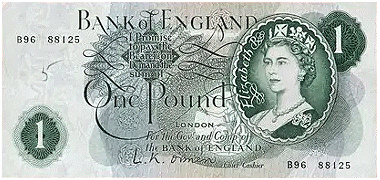
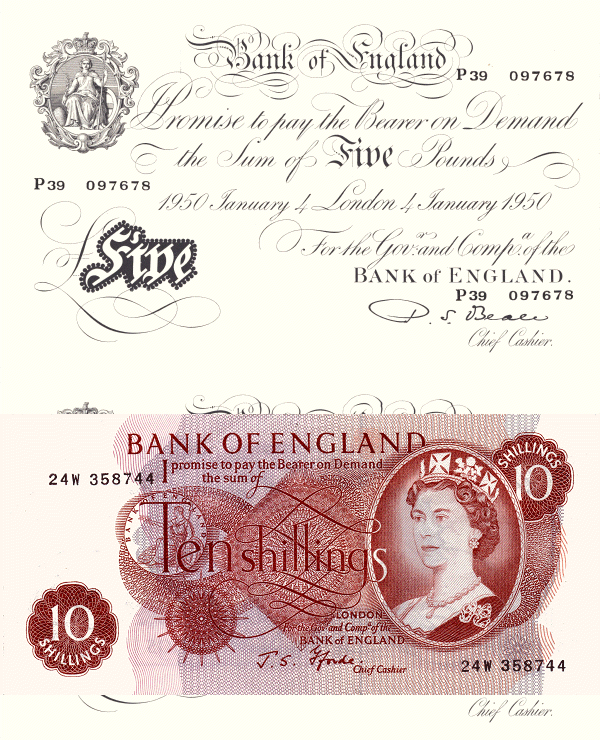
To begin. As with today, the major currency unit was the Pound. Circulated only as a paper 'promissory note'. The Pound uses the initial letter a sort of quaint, antique version of capital
L (naturally, er?) as prefix to amounts written in figures. For example
£123.
Pounds (no, not lbs AI!) comprised of two hundred and forty Pennies. Colloquially known as pence and using lower case
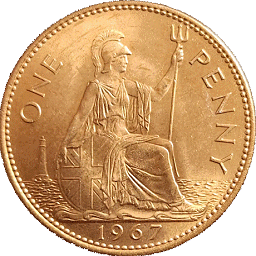
d as its abbreviated denomination (naturally, er?). Twelve pence were minted (nothing to do with mint sauce for roast lamb) as a silver coin called a Shilling.
Denomination lower case
s (thank Heaven for small mercies), also colloquially known as a Bob (don't ask, OK?!). Smaller multiple denomination coins were also frequently described as a
bit. Thus twenty Bob bits (no, not you Madam, kindly sit down!) making one
Pound. Try and keep up.
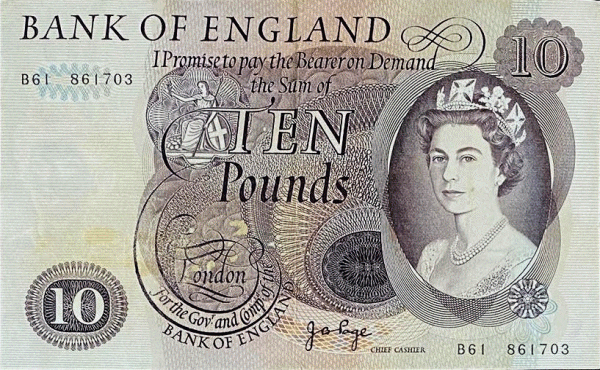 English Ten Pound note from 1970.
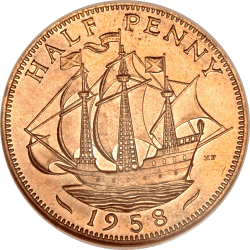
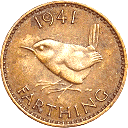
Other coins minted (made) in this line up were the halfpenny, pronounced haypenny (yes, I know, I know!), four hundred and eighty of which comprise one Pound. A further version to half of this was called a Farthing. Nine hundred and sixty making one Pound.
A lot of loose change was that. Subsequently removed from circulation and legal tender on 31 December 1960.
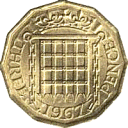
We must not forget the humble Thruppenny bit, worth three pence and which had twelve sides. Yes really! Sit DOWN I tell you! Eighty Thruppenny bits thus making one Pound.
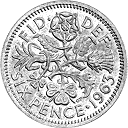
Six pence in value was minted as a little silver coloured coin, logically for once, called Sixpence. Colloquially known as a Tanner. No, I don't know why either. Forty Tanners made one Pound.
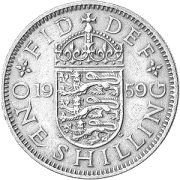
The Shilling coin had a value of twelve Pence. The coin known colloquially as a Bob. Twenty Shillings equalled one Pound.
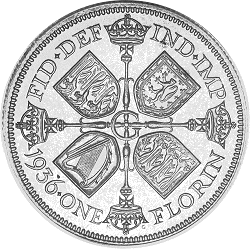
Further along the pence scale units were multiplied and minted as two shilling coins, called Florins. Colloquially known as two Bob bits (Madam, not you again. kindly sit down please. I won't tell you again!). Confusing this arrangement still further were Crowns.
Each worth sixty pence, thus four needed to make one Pound. Though no Crowns had been minted for decades and none were still in circulation at the time they were discontinued (get it? Keep up!).
However, there were Half Crowns, eight making one Pound. Commonly mis-described as 'Half a Dollar'. Particularly by members of the Armed forces and harking back to the last major world war when just two Half Crowns were needed in exchange for an American Dollar.
Yes, really, four Dollars to the Pound. At a time when Great Britain was still a viable trading nation. Unlike today where just US$ 1.32 buys £1
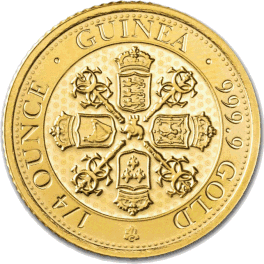
Finally, in the world of fine art trading, horse racing, the professions such as lawyers, private doctors and surgeons, none of these people used Pounds at all for presenting their usually monstrously, outrageous, highly inflated fees.
They used Guineas instead. Which were worth one Pound plus one Shilling. Though none had been minted for many decades before the practice was eventually discontinued. In its heyday of course it helped to disguise the true amount by which clients were being ripped off by people most of whom should have known better.
We told you it was simple!
Mistral's commitment:
Bringing benefits of computerisation to our RAC industry - without the commonly associated problems.
 Close and return to previous page

 Search



 Mistral EC
 Mistral USA